
Who should have a say in research about addiction?
In FALCO, it was important to us from the first steps that those who this is all about contribute in impactful ways. Service user representatives have collaborated closely with clinicians and researchers in shaping the project’s design and establishing its activities, and the ongoing strengthening of user involvement remains essential throughout the project’s five-year duration.
In this way, user participation in FALCO marks an important step toward the democratization of health research. It helps ensure that the perspectives, needs, and lived experiences of users are genuinely reflected in both research processes and outcomes. This involvement is intended to be an active and equitable partnership between user representatives and researchers, starting from the earliest phases of the research.
Multiple perspectives
Various actors are contributing to FALCO to complement researchers’ perspectives:
- Persons with lived experience of addiction problems
- Relatives of persons with lived experience
- Health care professionals from the field of addiction
- Policy experts
- Artists
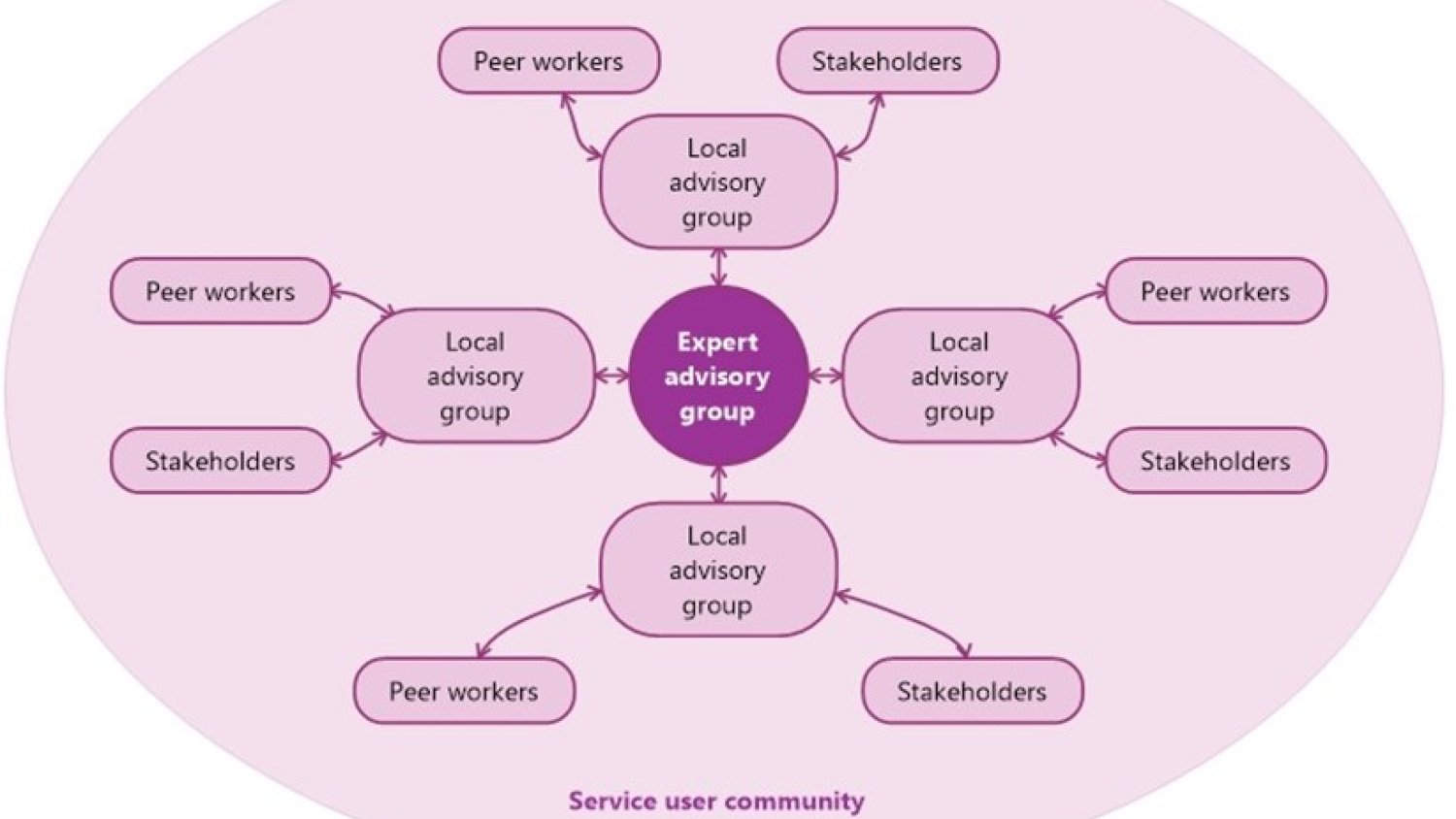
Their contributions shape FALCO on two levels:
In each of the countries participating in FALCO, a Local Advisory Group (LAG) provides advice and support regarding participant recruitment, assessments, interventions, and other aspects of study implementation at local sites.
An Expert Advisory Group (EAG) acts as advisory body for the overall study, overseeing and guiding all user involvement strategies and activities within the project.

Main components of the study design were based on discussions with service user representatives and experienced music therapists: From them, we heard for example that we should investigate music therapy in groups because the social exchange and support is considered such an important factor; that we should try to provide music therapy across settings – from detoxification units across rehab units to outpatient settings; and that we should make sure that recovery aspects and quality of life are covered in the outcomes.
Later on, in the implementation phase of the study, input from service user representatives on recruitment and assessment procedures has helped to clarify beneficial aspects of study participation and information on data security in consent forms; to avoid undue burden through splitting overly long assessment procedures; and to provide adequate support to facilitate study participation.
Trust and equality foster genuine user involvement.
Impressions from Norway
Building trust and creating safe spaces for critical discussions are essential to avoid superficial inclusivity of users with diverse backgrounds and expertise in research.
– In the FALCO project, users engage in an active and equal collaboration with peer support workers and researchers right from the very beginning of the project, says Lars Tuastad, leader of the work package of user/stakeholder involvement.
Involvement ensures that users' perspectives, needs, and experiences are reflected in the research. However, Norwegian user representatives emphasize the importance of recognizing the accompanying challenges. One such challenge is that many experts by experience feel their roles lack influence. It's crucial to have sufficient resources (time, staff, budget) and to clearly define expectations and roles. Continuous dialogue is essential to fostering genuine collaboration.
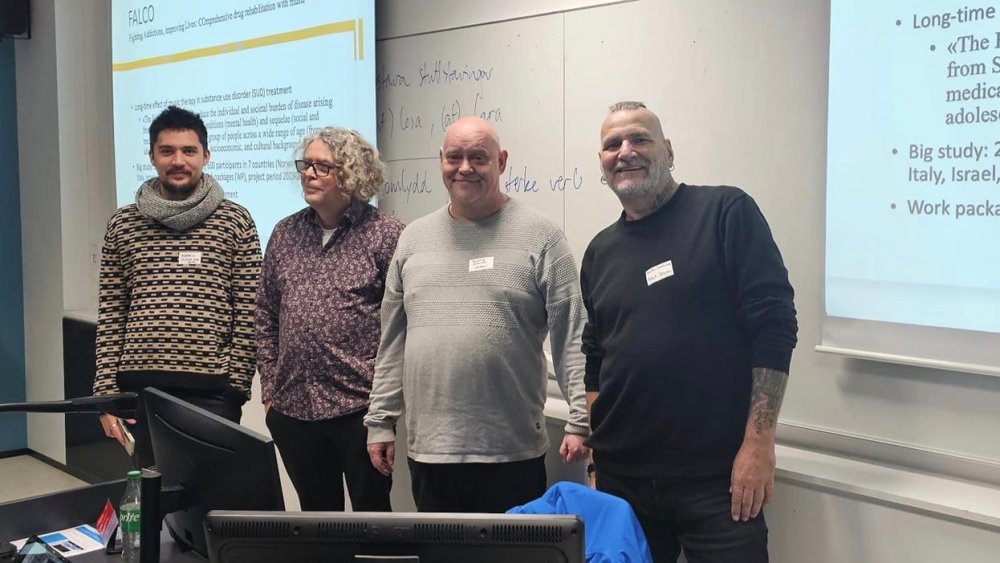
User representatives from FALCO in Norway regularly speak at conferences, here at the Polyfon conference in Bergen in November 2024. From left, Kenneth Dybdahl, Lasse Tuastad, Bjarte Johansen and Morten Sommerbakk.

They only make you worse